Noom vs. DASH Diet
Let’s take a closer look at noom vs dash diet and what it genuinely offers. Advertisement There’s a lot happening in the weight-loss space right now — some of it driven by new technology, some by renewed interest in tried-and-true diets that have quietly worked for decades. Here we compare a new, technology-driven approach with […]

Let’s take a closer look at noom vs dash diet and what it genuinely offers.
There’s a lot happening in the weight-loss space right now — some of it driven by new technology, some by renewed interest in tried-and-true diets that have quietly worked for decades. Here we compare a new, technology-driven approach with a classic, research-backed eating plan, and look at how the two can genuinely work well together.
Noom Vs Dash Diet: What Is Noom?
Noom is a weight-loss program built around the psychology of behavior change, giving users personal coaching, a customized plan, and a supportive community, through both a Healthy Weight Program and a Diabetes Prevention Program.
What Is the DASH Diet?
The DASH Diet was designed specifically to support heart health. According to the National Institutes of Health, “DASH is a flexible and balanced eating plan that helps create a heart-healthy eating style for life.”
Noom vs. DASH Diet: History
Brief History of Noom
Founded in 2008 by Saeju Jeong and Artem Petakov, Noom secured multiple funding rounds by 2020, including investment from Serena Ventures and Samsung, with offices in Tokyo, Seoul, and New York. While often labeled a “millennial app,” its user base spans well beyond that generation.
Brief History of the DASH Diet
The National Institutes of Health began funding research into dietary blood pressure interventions back in 1992, isolating dietary changes as the sole variable across multiple studies. The consistent results, lower blood pressure from diet alone, led to the DASH (Dietary Approaches to Stop Hypertension) Diet’s formal recognition.
Noom vs. DASH Diet: Who’s Behind the Plans?
Who Created Noom?
Petakov and Jeong built Noom with a team of personal trainers, psychologists, and nutritionists, designing a program that draws on personalized data unique to each user. Petakov’s path ran from an internship at Sun Microsystems through Google to co-founding WorkSmart Labs; Jeong spent six years running BuyHard Productions in Korea before the two partnered.
Who Created the DASH Diet?
DASH has no single creator — it’s the product of ongoing clinical research that continues to evolve as new evidence emerges, which is part of why it’s consistently ranked among the healthiest overall diets.
Noom vs. DASH Diet: The Rules
Rules of Noom
Rather than strict rules, Noom leans on food tracking, exercise tracking, and weight monitoring, plus optional blood pressure and blood sugar tracking. After an initial questionnaire, users get a suggested calorie target that can grow with exercise.
Food Tracking: Calories matter, but foods are simplified into green, yellow, and red categories to gradually shift how users think about eating. Green foods (fruits, vegetables, non-fat dairy) make up the bulk of intake, yellow (lean meats, avocado, hummus) in moderation, and red (fried foods, processed snacks, white flour products) sparingly.
Exercise Tracking: Burn 400 calories in a workout, and half — 200 calories — gets added back to your daily goal.
Lessons and Quizzes: Daily articles and quizzes, just 10 minutes a day, cover everything from how the body uses food to when to lean on support — spread across the full 16-week program.
Rules of the DASH Diet
DASH guidelines get fairly detailed, starting with calorie needs based on age and activity level (sedentary, moderately active, or active). For example, sedentary women aged 19-30 are guided toward roughly 2,000 calories, while active men in the same age range may need up to 3,000. From there, food group servings scale with total calorie intake — more calories mean more servings across grains, vegetables, fruits, dairy, lean protein, and fats, generally ranging from 2-3 servings of dairy up to 4-13 servings of grains depending on calorie level. Sodium is capped at 2,300mg daily (1,500mg on the lower-sodium version).
Noom vs. DASH Diet: Eating Plans
The Noom Eating Plan
Noom centers on whole-food variety, gradually building lasting habits through daily lessons rather than restriction. No foods are removed from the diet — the focus is on portion guidance and smarter choices. The CDC has recognized Noom as an official lifestyle change program.
The DASH Eating Plan
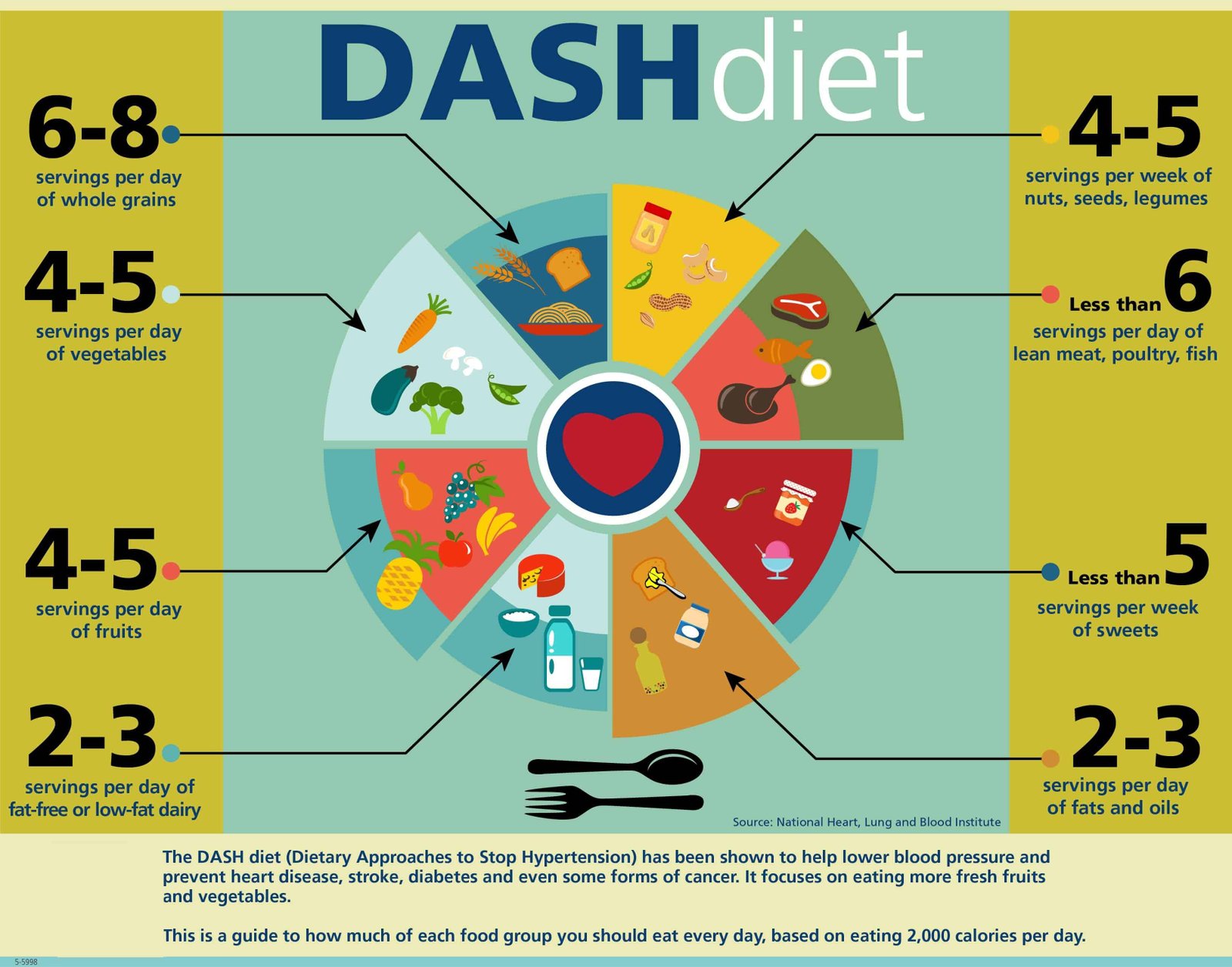
DASH revolves around two key levers: sodium (2,300mg standard, or 1,500mg for the lower-sodium version) and food group balance — roughly 6-8 servings of grains, 4-5 each of vegetables and fruit, 2-3 servings of dairy, up to 6 ounces of lean protein, 4-5 weekly servings of nuts/seeds/legumes, 2-3 servings of healthy fats, and no more than 5 weekly servings of sweets.
Noom vs. DASH Diet: Plan Duration
Noom’s core program lasts a minimum of 16 weeks, though users can continue indefinitely afterward. DASH has no time limit at all — it’s designed purely as a lifelong approach to managing blood pressure and supporting overall heart health.
Key Differences Between Noom and DASH
The clearest distinction is format: Noom is an app-based education program, while DASH is a straightforward eating framework with no built-in coaching or step-by-step guidance. The two align well in principle, but DASH alone doesn’t offer the structured support Noom provides for actually making the shift.
Can You Follow the DASH Diet on Noom?
Yes. DASH’s emphasis on whole grains, vegetables, fruits, dairy, and lean meats fits naturally within Noom’s green/yellow/red framework and broader lessons on healthier eating.
Possible Side Effects
DASH carries a small risk of blood pressure dropping too low in some individuals, though this is uncommon. Noom’s only “side effect” is weight loss and improved eating habits.
Noom vs. DASH Diet: The Research
A study of more than 35,000 Noom users in Scientific Reports found nearly 78% reported weight loss, with dinner tracking as the strongest predictor of success. Obesity Research and Clinical Practice found a significant BMI reduction with app use, and Metabolic Syndromes and Related Disorders confirmed Noom supports long-term weight maintenance.
DASH’s research history runs deep, marking its 20th anniversary in 2018. According to the Journal of the American Medical Association (JAMA), “The DASH diet represents a potentially affordable and scalable intervention that could almost immediately produce considerable improvements in population health.” Research from the American Diabetes Association also notes DASH can adapt well to entire families, and a study in the Journal of the American College of Cardiology found the blood-pressure-lowering effect grows even stronger when paired with sodium reduction — a finding echoed in a later 412-participant trial, especially for those with the highest baseline blood pressure.
The Bottom Line: Noom vs. DASH Diet
DASH is widely regarded as one of the healthiest diets available, built on real whole-food principles that align closely with Noom’s own philosophy. Noom’s advantage lies in the structured, coached path it offers to actually implement those principles day to day, in just minutes a day.
Frequently Asked Questions
Explore more Health Articles reviews and guides on our site.
Overall, noom vs dash diet remains worth understanding before you decide.
Overall, noom vs dash diet remains worth understanding before you decide.