Lipozene Review: 6 Critical Glucomannan Facts
“America’s #1 diet supplement” that lets you “lose weight without changing your lifestyle” is a bold pitch — no exercise, no diet changes, just capsules. This Lipozene review exists because when a claim sounds that convenient, it’s worth checking what’s actually backing it up — and the company doesn’t link to the studies it references, […]

“America’s #1 diet supplement” that lets you “lose weight without changing your lifestyle” is a bold pitch — no exercise, no diet changes, just capsules. This Lipozene review exists because when a claim sounds that convenient, it’s worth checking what’s actually backing it up — and the company doesn’t link to the studies it references, which is usually the first sign to dig deeper.
How We Researched This Lipozene Review
We started this Lipozene review by pulling the FTC and court filings tied to Obesity Research Institute, then cross-checked every glucomannan study we could find in PubMed against the specific claims on Lipozene’s own packaging and website. We also read through the BBB complaint history and a wide sample of verified purchaser reviews to see how the clinical picture matched up with real-world experience.
Lipozene Review: What Is It, Really?
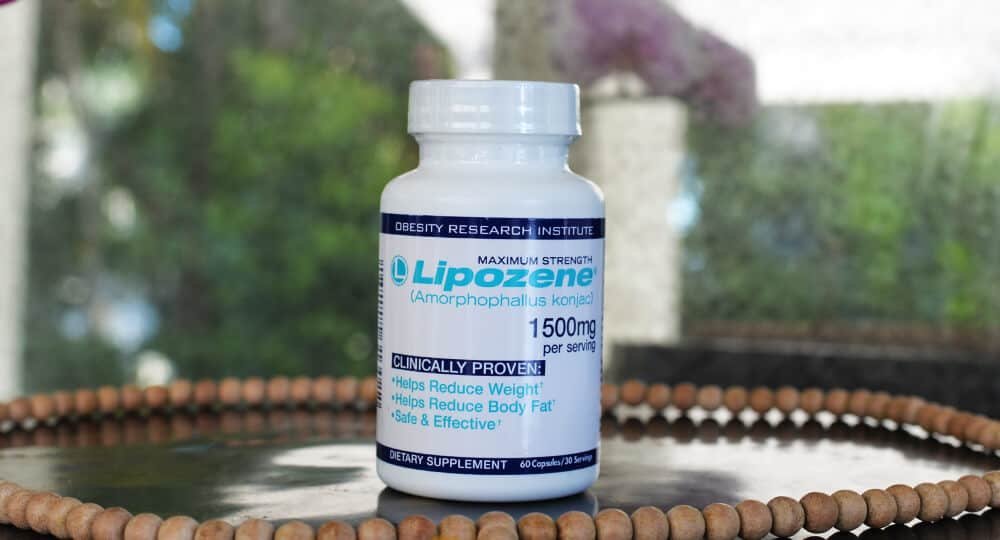
Lipozene has been on shelves for well over a decade, sold by the Obesity Research Institute (ORI). Its entire formula rests on one active ingredient: 750 mg of glucomannan, a soluble fiber pulled from the root of the konjac plant. Glucomannan absorbs water and expands into a thick gel in the gut, which is the basis for claims that it curbs appetite. The remaining ingredients — gelatin, microcrystalline cellulose, magnesium silicate, stearic acid, titanium dioxide, and FD&C Blue No. 1 — are inactive fillers and coloring.
The company claims 78% of any weight lost on Lipozene is pure fat and says it’s sold more than 20 million bottles. Those are marketing figures, not published clinical results — worth flagging up front in any honest Lipozene review.
What Glucomannan Research Actually Says
- The American Journal of Clinical Nutrition found glucomannan’s effect on weight was “positive, yet negligible.”
- A study in the International Medical Journal of Experimental and Clinical Research found the fiber’s benefits are short-term at best.
- The Journal of Obesity reported that fiber-supplement advantages tend to fade after about six weeks, and work best paired with a genuinely low-calorie diet rather than alone.
- A separate 2013 trial in the Journal of Obesity, testing glucomannan alone for eight weeks, found it “did not promote weight loss or significantly alter body composition or hunger/fullness.”

How to Take Lipozene — and What It Might Do to You
The label recommends two capsules roughly 30 minutes before meals, up to three times a day (six capsules max, 1.5 g per dose). Because glucomannan is a viscous fiber, side effects tend to track with fiber intake generally: gas, bloating, diarrhea, constipation, and abdominal discomfort are all plausible, and overdoing it compounds the risk. Duke University’s own guidance on excessive fiber intake lists the same cluster of symptoms, which lines up with what Lipozene users report.

Who Lipozene Actually Makes Sense For
Lipozene fits best for people who struggle to get enough fiber from food and want a stimulant-free way to feel fuller before meals — think of it as a bulking agent, not a fat burner. It’s a poor fit for anyone hoping for the “no diet, no exercise” result implied by the marketing, since the actual research shows the fiber’s effect is modest and short-lived on its own. Anyone with a digestive condition, or who is already prone to bloating or IBS symptoms, should be especially cautious, since glucomannan’s whole mechanism is built around fiber bulk and water absorption in the gut.
Lipozene vs. Other Diet Pills
Compared to stimulant-based products, Lipozene’s approach is entirely different — it’s a bulking fiber, not a stimulant. Our Slimquick review and Phenocal review both cover formulas built around caffeine and thermogenic plant extracts to raise energy expenditure, which makes Lipozene gentler but also means it isn’t doing the appetite-suppressing, metabolism-raising work those competitors are built around. Our Relacore review takes yet another angle, targeting stress-related weight gain rather than fat absorption or appetite directly. None of the three approaches has strong, consistent human-trial data behind it — the differences are mostly in mechanism and side-effect profile, not in proven results.
Legal Trouble Worth Knowing About
Lipozene’s marketing claims have drawn regulatory attention more than once:
- 2005 — the FTC fined ORI $1.5 million over claims that Lipozene caused “rapid, substantial weight loss without any need to diet or exercise,” and barred the company from making unsupported claims about any dietary product going forward.
- 2011 — a class-action lawsuit over false weight-loss claims resulted in over $5 million paid to customers.
- 2014 — the FDA warned a Lipozene manufacturing subsidiary for using untested raw materials, a Food, Drug, and Cosmetic Act violation.
- 2016–2020 — further class actions over continued false-advertising claims, settled for $4.6 million in 2020.
That’s a fairly dense legal history for one supplement, and it’s part of why customer sentiment online skews more skeptical than the marketing copy would suggest.
Cost
Buying direct from the manufacturer runs about $29.95 per 60-capsule bottle after a free-trial signup, with subsequent auto-shipments at the same price — working out to roughly $90/month at the full six-capsules-a-day dose. Walmart sells it noticeably cheaper, around $19.99 a bottle, so shopping around matters here.
If You Want the Fiber Without the Brand
Glucomannan itself isn’t exclusive to Lipozene — it’s available from several other brands (Nature’s Way and PGX among them) typically at a lower cost per gram and without the legal baggage. You can also get soluble fiber from food directly: legumes, oats and barley, broccoli and other cruciferous vegetables, and fruits like apples and pears all contribute meaningfully to daily fiber intake, which the NIH’s own fact sheet puts at 25g/day for women and 38g/day for men.
Lipozene Review: Frequently Asked Questions
Lipozene Review: The Bottom Line
Lipozene’s core ingredient has some legitimate research behind it, but that research consistently describes the effect as small and short-lived — not the dramatic, exercise-free transformation the marketing implies. Combine a track record of regulatory fines with a per-month cost that’s higher than buying glucomannan on its own, and this is a product where the packaging is doing more work than the formula. If soluble fiber is genuinely what you’re after, cheaper and better-documented options exist — which is the honest conclusion of this Lipozene review.