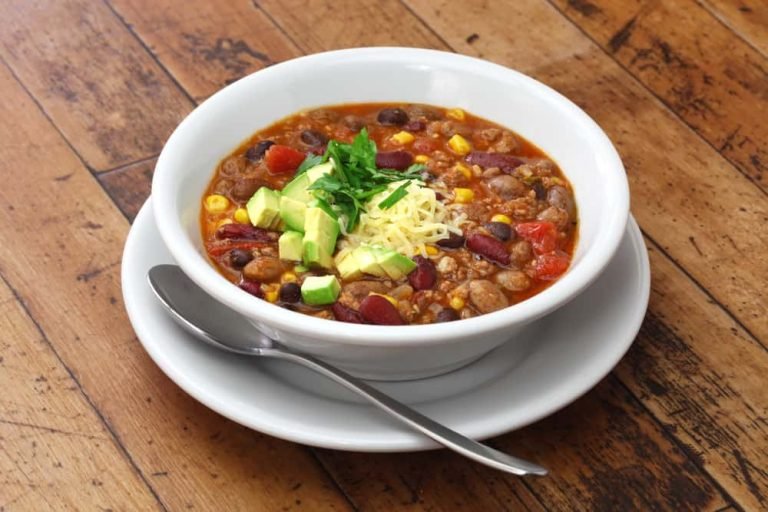
11 Tips to End Mindless Eating for Good
How many food decisions do you think you make in a day — 5? 15? 30? According to a study in Environment and Behavior, the average person makes as many as 221 food-related decisions daily. Table of content Make Snacks Harder to Reach Advertisement Concentrate on Mindful Eating Eat Out of Hunger, Not the Clock […]


How many food decisions do you think you make in a day — 5? 15? 30? According to a study in Environment and Behavior, the average person makes as many as 221 food-related decisions daily.
Most of those decisions happen below your conscious awareness, driven by your subconscious — and that’s exactly where mindless eating comes from.
Mindless eating — grabbing candy from a bowl, polishing off a bag of chips in front of the TV — can genuinely add up, potentially contributing 10 extra pounds a year, according to The Science of People.
Here are 11 ways to stop mindless eating in its tracks.
“In practical terms, you are the sum of your behaviors,” says Sam Yang, fitness coach and martial artist at All Out Effort.
Make Snacks Harder to Reach

Would you still bother with a snack if you had to walk farther or work harder to get it? Research (including a study published on candy visibility and convenience in Appetite) suggests you might not. When candy dishes are moved farther from office workers’ desks, people reach for them far less often — the extra steps give them time to actually consider whether they want it.
Keep pre-cut, washed veggies within easy reach, and put less healthy snacks somewhere that requires real effort to access.
Summing It Up:
Making snacking more inconvenient forces a moment of consideration before that bite happens, curbing mindless eating.
Concentrate on Mindful Eating

Watching TV or scrolling your phone while eating leads to eating more without feeling full, according to research in the British Journal of Nutrition and The American Journal of Clinical Nutrition.
One study split participants into three groups: one playing a computer game while eating with a cash incentive, one playing without an incentive, and one just eating. The most distracted group ate 69% more than the control group, while the mildly distracted group ate 28% more, per The Medical Daily.
A separate study found people watching longer TV shows ate more than those watching shorter ones — participants watching a one-hour show ate 28% more than those watching a half-hour show, according to research in Appetite. Distracted eating makes it genuinely easy to lose track of how much you’ve eaten, per WebMD.
Summing It Up:
When you eat, just eat — skip the phone and TV. You’ll eat less and feel fuller. “One easy way to eat more intuitively is to begin to think about how you see different types of food. Do you think of some as ‘good’ and some as ‘bad?’ If so, how do you feel when you eat those? After so much time being on a diet or eating in a restrictive way, it’s easy to see how emotions like guilt and shame can come from eating something as simple as a cupcake. When really, it’s just a cupcake! Try removing those mental labels as much as you can. When you stop moralizing food, then it’s easier to get out of that all-or-nothing mindset. Instead, you can slow down, enjoy your food and be mindful,” says Jennipher Walters, CEO and co-founder of Fit Bottomed World LLC.
Eat Out of Hunger, Not the Clock

Watching the clock to decide when to eat next can lead to overeating. A study in the Journal of Personality and Social Psychology found people who ate based on a clock (regardless of accuracy) ate more often than those relying on their body’s own hunger cues.
In the study, participants sat in a windowless room with a clock deliberately running faster than normal. Those watching the clock for meal timing ate more frequently than those tuned into internal hunger signals. Interestingly, participants who were obese and believed they were eating past their normal dinner time ate more than when they believed they were eating earlier than usual.
Some professionals recommend rating your hunger on a scale — zero being ravenous, five being overstuffed — to build the habit of listening to your body, per WebMD.
Summing It Up:
Eating on a fixed schedule can lead to overeating — instead, check in with your actual hunger before sitting down to eat. “Zero in on your overeating triggers. These triggers are different for everyone: For many of us, the most likely triggers are thoughts that create feelings of stress, loneliness, and for some of us, even happiness,” says Michele Lian.
Rethink Bulk Food Storage
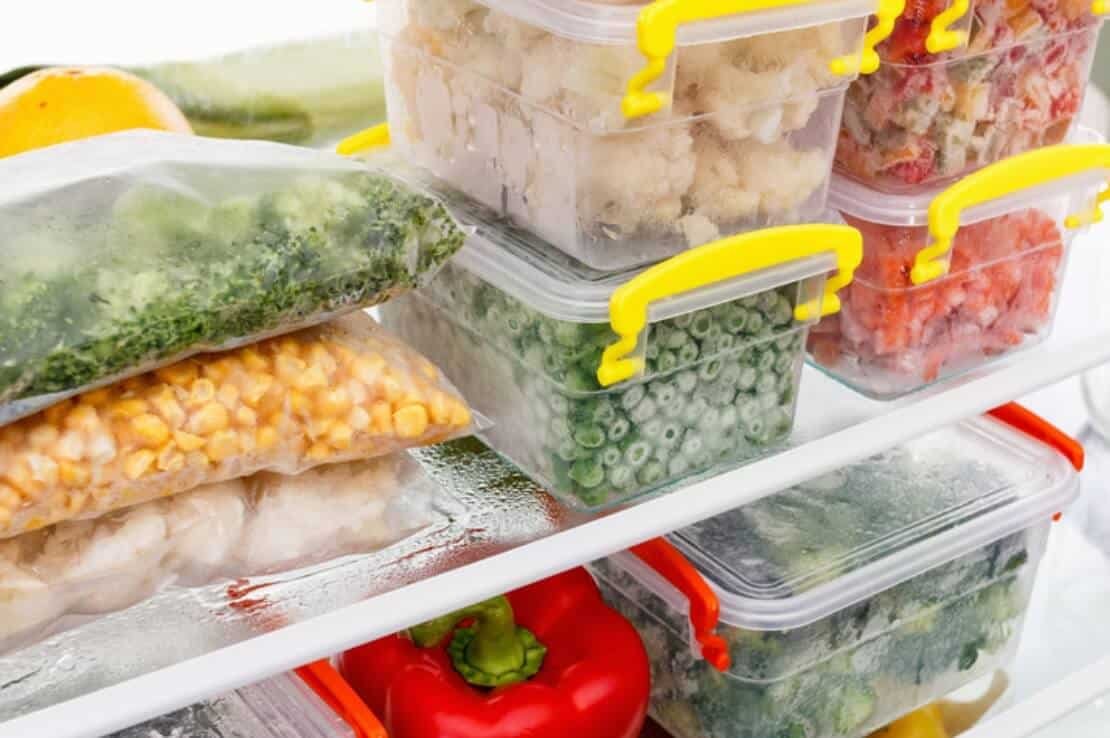
Stocking up on a favorite food when it’s on sale feels smart, but having large quantities on hand can genuinely lead to overeating, according to research from the American Marketing Association. Part of the reason is a fear of wasting food, per The Medical Daily.
One study on college students found those given double the snacks consumed 81% more calories than those given a smaller supply.
Summing It Up:
Rather than buying snack foods in bulk, purchase only what you need between shopping trips.
Pick Your Dinner Company Carefully
Advertisement
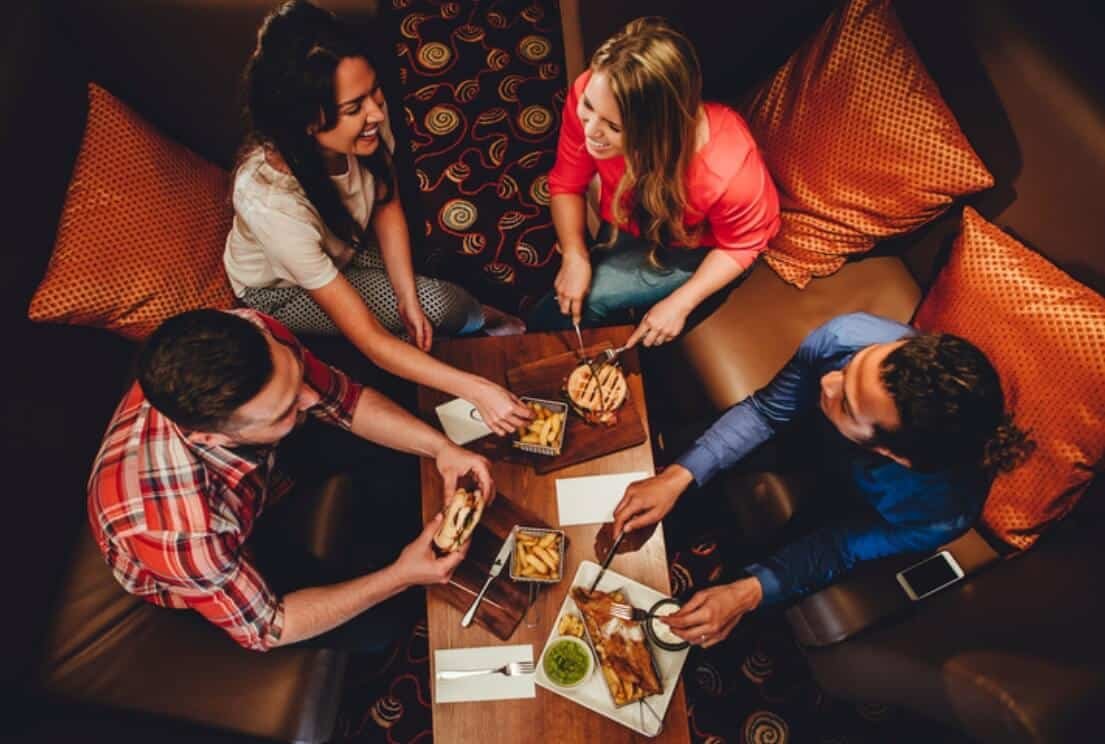
Eating alone tends to mean eating less. Research in Physiology & Behavior shows dining with even one other person can increase intake by up to 35%, and up to 96% in groups of seven or more.
Eating alone isn’t unusual anymore — about half of all meals and snacks Americans eat happen solo, according to The Washington Post. You can’t always control who you eat with, and probably don’t want to — but eating alongside people who make healthy choices tends to influence your own choices similarly.
A few tricks can help when dining with others: smaller dishes create the visual impression of a fuller portion. One study found campers given larger cereal bowls ate 16% more while believing they’d eaten less. Plate color matters too — bright red plates have been linked to reduced intake, according to Women’s Health Magazine.
Summing It Up:
Eating alone tends to mean eating less, but smaller, red-toned dishes can help when dining with others.
Think Food Volume for Faster Fullness
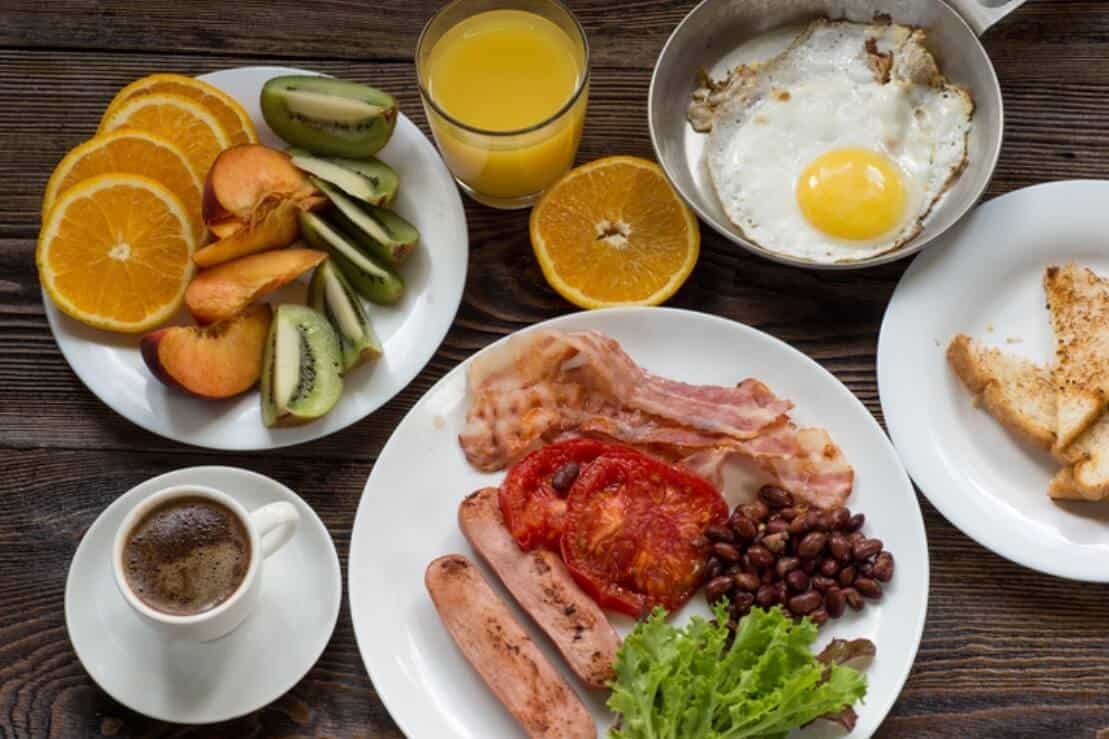
A meal that looks like a lot of food tends to make you feel fuller and eat less, regardless of actual calorie count. Researchers tested this using smoothies — one group received a smoothie with air whipped in to appear larger, though both smoothies had identical calorie counts. The group with the visually larger smoothie reported greater fullness and ate 12% less at their next meal.
Since adding air to food isn’t always practical, adding fiber is a more realistic way to feel fuller on fewer calories, according to the Mayo Clinic. Most people fall well short of the recommended 25 grams (women) or 38 grams (men) of daily fiber, typically eating closer to 15 grams, per WebMD. Beyond fullness, fiber also supports heart health and can lower cholesterol.
High-fiber, low-calorie foods worth adding include hummus, oatmeal, lentils, popcorn, carrots, apples, and oranges, according to Women’s Health Magazine and the Mayo Clinic.
Summing It Up:
Choose high-volume, low-calorie, fiber-rich foods to feel fuller for longer without extra calories.
Health Foods Aren’t Always Healthy

Choosing so-called “health foods” labeled “low-fat” can actually encourage more mindless eating. “Low-fat” products often aren’t lower in calories, and are frequently loaded with sugar to compensate for lost flavor, according to Health.com.
One study found 10% of low-fat products matched the calorie count of their standard counterparts, and 40% actually contained more sugar. Another study found participants ate about 33% more chocolate when it was labeled “low-fat” versus “regular,” likely because low-fat labeling reduces feelings of guilt around eating it, according to Medical News Today.
Research comparing calories eaten at Subway versus McDonald’s found Subway diners underestimated their calorie intake by about 34%, while McDonald’s diners overestimated theirs by about 25%. Researchers also noticed Subway diners were more likely to reward their “healthy” main course choice with less healthy sides like cookies or chips — a pattern researchers call the “halo effect.”
To avoid falling for the halo effect, judge foods by their actual ingredients and labels rather than how they’re marketed.
Summing It Up:
Foods marketed as “healthy” often aren’t — read labels carefully and avoid rewarding a healthy main course with an unhealthy side.
Too Many Options Leads to Mindless Eating

Having lots of food variety available tends to increase how much you eat compared to having just a few options — a phenomenon called sensory-specific satiety, where enjoyment of a specific food drops after eating enough of it.
One study in Appetite gave participants chocolate milk, then split them into groups asked to play a game for more chocolate milk or crisps. The group offered crisps was more motivated to keep playing, and participants reported reduced enjoyment of the chocolate milk’s taste and smell by that point — showing sensory-specific satiety affects both liking and wanting more of a given food.
Summing It Up:
Limiting food variety at a meal can help you eat less — avoid stocking too many different snack options at once.
Think Small Packaging
Eating from larger packages can lead to up to 25% more calorie intake. One study gave participants either a 16-ounce or 8-ounce bag of M&Ms — those with the larger bag ate an average of 66 more candies.
Our impulse toward larger packages often comes from wanting a better deal, but research from Critical Reviews in Food Science and Nutrition and INSEAD shows smaller packages lead to less overall consumption, regardless of the food’s total volume.
Pay attention to serving sizes on packaging — vending machine snack bags often contain more than one serving. Rather than eating straight from the package, measure out a serving and put the rest away, per CDC guidance.
Summing It Up:
Larger packaging encourages mindless overeating — choose smaller packages and measure serving sizes.
Don’t Keep Food in Plain Sight

Keeping food visible increases mindless eating. Research from the American Marketing Association shows clear packaging with small, appealing food increases consumption. One study in the International Journal of Obesity found people reached for candy 71% more often when the bowl was clear versus opaque.
Use this to your advantage: keep less healthy treats out of sight, and place healthy snacks like fruit and vegetables in plain view instead.
Summing It Up:
Store treats out of sight to reduce mindless snacking, and keep healthy options visible instead.
Slow Down, Take Your Time

If your mom told you to slow down while eating, she was right. Eating quickly means consuming more before your body can signal fullness, per WebMD.
Eating more slowly gives your body time to register fullness before you reach for a second helping, according to The Journal of Clinical Endocrinology and Metabolism. It also lets you actually enjoy the taste, smell, and texture of your food, leading to greater satisfaction, per WebMD.
Summing It Up:
Slowing down while eating gives your body time to register fullness and boosts meal enjoyment.
What You Need to Know About Mindless Eating
Mindless eating can drive weight gain or make it harder to lose weight — eating more calories than intended and making less healthy choices along the way.
“Cooking large quantities of food and portioning it out to be saved for the week (aka ‘meal prepping’) is the key to reaching any health/fitness goal. There are levels to the meal prepping game but the steps for a first-time cooker would be grocery shopping, cooking a protein (meat, fish, quinoa, etc), vegetables (broccoli, asparagus, cauliflower, etc) and carbohydrates (rice, quinoa, etc.) all during the same 2-3 hour time frame. Once everything is cooked, I like to weigh out my portions, so 6-7 oz of protein, 3-4 oz veggies, and 3-4 oz carbs then place the three foods in separate plastic or glass containers. I got into this habit when I worked a desk job and didn’t have time to cook dinner when I got home. Now as a personal trainer, a standard meal prep these days is 6-8 meals which would last me 3-4 days of lunch and dinner,” says Mark Barroso, NSCA-CPT, Spartan SGX Coach, and health writer.
Following these 11 simple tips can help you avoid mindless eating and build healthier habits that genuinely stick.
Explore more Health Articles reviews and guides on our site.
For general guidance on healthy weight management, see the resources available from Mayo Clinic.