
Common Emotional Eating Triggers and How to Manage Them
Growing up in an Italian family meant food everywhere, all the time — and lots of it. We were a family of four, but my mom always cooked as if there were 12 of us at the dinner table. Table of content Uncomfortable Emotions Stress Causes Emotional Eating Comfort Eating Boredom Eating Managing Emotional Eating […]


Growing up in an Italian family meant food everywhere, all the time — and lots of it. We were a family of four, but my mom always cooked as if there were 12 of us at the dinner table.
Was it about leftovers, or something closer to emotional eating? We live in a culture where oversized portions are the norm. Whether or not you grew up in a household like mine, food tends to be abundant in American culture — and so are the issues that come along with it.
We don’t eat purely out of hunger. Emotional eating plays a real role too, and experts widely agree it’s one of the leading reasons weight loss is so difficult to sustain, according to Psychology Today.
We’ve all heard the term, but what does emotional eating actually mean? In simple terms, it’s eating for reasons other than physical hunger. If you’re trying to lose weight but keep eating for reasons that have nothing to do with hunger, there’s a good chance emotional eating is working against your progress. Triggers vary from person to person, but a few patterns show up consistently across research on the topic.
“We all know that disordered eating has to do with one’s world being out of balance — food and weight are used to cope with feelings, to withdraw, to protect one’s self,” says Dr. Judith Brisman, PhD, CEDS, psychologist, author, and eating disorder treatment specialist.
Uncomfortable Emotions
Negative emotions don’t feel good, so it’s natural to want to ignore, avoid, or push them aside. Using food to numb uncomfortable feelings is one of the most common ways people do exactly that.
“Changing personal appearance in healthy ways can enhance self-esteem,” notes Dr. Fran Walfish, a child, couple, and family psychotherapist.
When anger, hurt, resentment, or sadness surface, it’s easy to reach for a bag of chips or a pint of ice cream instead of letting the emotion actually be felt. “Ask yourself, ‘How do I feel if I don’t work out — or skip a day or two altogether? If it makes you feel stressed, guilty or bad about yourself, if you have to work out twice as hard the next day to make up for it, or if you can’t back off when you’re tired, sick or injured, it’s a sign of a problem,'” says Jodi Rubin, ACSW, LCSW, certified eating disorder specialist and founder of Destructively Fit.
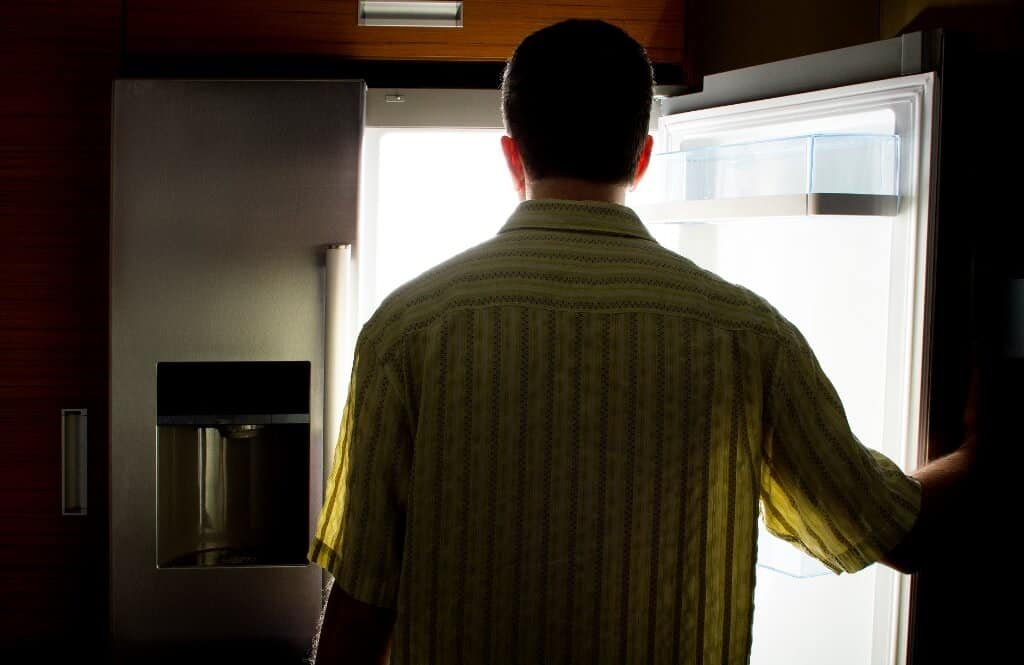
Numbing with food only offers a temporary fix. The underlying emotion returns if it’s never actually addressed, often creating a repeating cycle of emotional eating over time.
“One of the most important first steps to working with emotional overeating is making sure you are fed well and consistently and satisfyingly throughout the day. When we get too hungry, we might eat in a chaotic way that can feel out of control and very emotional. If we are ever to understand emotional overeating better and work toward responding to it more precisely, we need to separate it from this kind of primal physical hunger. Once that is stabilized, we can begin to sense what is happening in the body when we have the urge to eat in the absence of physical hunger,” says nutritional therapist Jenna Hollenstein, MS, RDN, CDN.
Stress Causes Emotional Eating
Client after client describes the same pattern: heavy pressure at work leading directly to poor eating habits. Stress is a major trigger for emotional eating, since the body’s stress response raises adrenaline and cortisol, according to Minerva Endocrinology.
“Shame is a large component of emotional eating, and many people suffering from this issue eat as an act of self-care in response to internalized pressures and triggers — most of which are completely out of their control. Emotional eating is, for the most part, a response to shame and fear, and paired with the fact that most people suffering from emotional eating also do not trust their ability to care for themselves, it can make things more complicated. Emotional eating can be a lingering issue from previously treated disordered eating (or even a form of an undiagnosed eating condition), and therefore at the very least requires the practice of mindfulness — tuning into your feelings at that moment and paying close attention to your physiological responses,” says Erin Campbell, NASM-FNS, certified nutritional therapist and life coach.

One common way people manage stress is by eating — and rarely does that mean reaching for raw vegetables. Part of the reason is that we don’t naturally associate fresh produce with foods that make us “feel better,” even though they genuinely support the body, according to MedlinePlus.
“Stress is a consistent trigger in everything from failing to stay on diets to addiction relapses. Whatever the object of our desire, feeling stress makes us think we need it like we need air to breathe. Unfortunately, the research on stress leads to an uncomfortable conclusion — not only does stress predispose us to wanting pleasure, it makes our desire for it drastically out of proportion to our enjoyment. The reward never reaches the level of our want,” says David DiSalvo, science writer and author of What Makes Your Brain Happy and Why You Should Do the Opposite.
The stress response also raises cortisol levels, and excess cortisol drives cravings for sweet and salty food specifically — which is part of why chips, nachos, or something sweet tend to feel so appealing under stress. According to the Journal of Eating Disorders, practices like mindful eating and emotional regulation can genuinely help counter stress eating.
“Emotional overeaters need to learn to separate hunger from other needs. Ask yourself: ‘What am I really in need of right now? How am I feeling? What challenges do I face? Am I angry? Am I lonely? Am I sad? Am I bored? Am I feeling unappreciated?'” says Petra Beumer, MA, owner and founder of the Mindful Eating Institute in Santa Barbara.
Comfort Eating
Maybe food played the role of comforter growing up in your household — a hot fudge sundae after a rough day at school, or friends showing up with a gallon of ice cream after a breakup.

Food genuinely can offer comfort — a bowl of hot soup or a mug of hot chocolate on a cold day is a real pleasure. But when food becomes the default response every time we’re struggling or going through something difficult, it’s easy to fall into a cycle of unhealthy emotional eating. Food will never provide the deeper comfort we’re actually seeking; that has to come from within.
“Visualization is a technique of mentally rehearsing in advance new behaviors and reactions to emotional triggers. In this way, you can power up your ability to respond to emotions without reaching for food. Starting today, visualize and imagine making healthy behavior choices for the next time your trigger emotions flare. For instance, mentally see yourself taking some deep breaths and heading out the door for a walk or to the gym when you feel stressed — or enjoying a hobby or the company of a pet or friend when you’re feeling bored or lonely. To make this even more effective, include feelings of pride, happiness, and success with your mental rehearsal. In this way, when your trigger emotions flare, your mind is already programmed to react in healthy non-eating ways. What you visualize is what you become. Taking control of the images in your mind will allow you to take control of your habits,” says Kristin Volk Funk, MEd, author of As Thin As You Think.
Boredom Eating
Boredom is another major trigger for emotional eating, according to research in the Journal of Health Psychology. Open, unstructured time or a general lack of motivation often creates a reason to reach for food simply to fill the gap.
This pattern can become a genuine habit — a lazy Saturday afternoon with nothing planned can easily turn into a binge-watching session paired with a bag of chips that disappears three episodes in, not out of hunger but simply because boredom went unnoticed and unaddressed.
“We all know that supportive friends can really help people to stay motivated in achieving their goals. Top reasons you might want to help your friends are that you understand their struggles, have empathy for their experience, and care about them. When they struggle or slip off the path (as they will surely do), you would hopefully offer compassion and encourage them to try again. Now just imagine how helpful it would be if you took that same approach with yourself. After all, you can have no greater or more influential friend than the one you find inside,” says Leslie Becker-Phelps, PhD.

All of these triggers share a common thread — using food to numb, avoid, or cover up something you don’t want to feel. And they’re remarkably common, unfortunately not just making weight loss harder but also fueling feelings of shame, guilt, and self-criticism, which can spiral into even more emotional eating and become a genuinely difficult cycle to break.
Managing Emotional Eating Triggers
Emotional eating is, at its core, usually a form of mindless eating — eating without paying attention to the body’s actual physical cues, often to excess.

The first practical step is setting a daily intention to eat mindfully — paying attention to your body’s hunger and fullness signals, and how you feel both physically and emotionally before, during, and after eating.
Why Can’t I Stop Eating Based on Emotion?
It starts with recognizing when an uncomfortable emotion is driving you toward the pantry. According to research, poor emotion regulation skills can be a genuine contributor to emotional eating. Did you just have an argument with someone you love, and now you’re feeling angry or hurt? Naming the emotion out loud, or even just to yourself — “I’m feeling hurt,” “I’m feeling angry” — is a surprisingly effective first step. Naming an emotion honors it, and that recognition alone begins to loosen its grip.
How to Stop Eating Because of Emotions
This is often the hardest part. No one enjoys feeling angry, hurt, or sad — which is exactly what emotional eating is usually trying to cover up.
“The more restrictive we are with food, the more we crave it. Willpower is a limited resource & eventually we all give in. If you’re being over-restrictive & labeling food as “good” or “bad,” this results in feelings of failure & self-loathing when food doesn’t go according to plan, triggering a spiral of “restrict – binge – self loathe – restrict – binge – self loathe” & so on. It’s much more effective to set realistic goals around food & enjoy it for what it is. Food fulfills many roles — fuel, comfort, social connectedness. It nourishes the mind & the soul. Further, the number on the scales or the tag in your jeans doesn’t determine your worth as a person. Health and people come in all shapes and sizes, don’t rate your self worth on your relationship to gravity (i.e., the scales). Appreciate your body for all the wondrous things that it is capable of. Nourish it and care for it regardless of its shape or size. It’s much easier to nurture a body you respect & appreciate than a body you hate,” says Joanna Baker, APD, founder of Everyday Nutrition.
Pay attention to how you feel and why you want to eat — physical hunger versus something else — and you’ll start recognizing the emotion underneath. Emotions are energy in motion, and they need to be felt to move through the body rather than getting stuck there. Sitting with a feeling until it naturally passes — and it will pass — is genuinely empowering. Some emotions take longer to process than others, and some need to be felt more than once, but the more you let yourself feel your feelings, the less likely you are to reach for the box of cookies out of habit.

How to Control Emotions While Eating
Every choice — your health, your nutrition, your life — comes down to a decision in the moment. As you recognize and name an uncomfortable emotion or situation, you get to choose how to respond. You can numb it with food, or you can do something else entirely. That choice is always yours.
Practice Mindful Eating
The basic principle of mindful eating is simple: if you’re genuinely hungry, eat. Pay close attention while eating to your body’s signals — it will let you know when you’ve had enough, and from there, the choice to stop or continue is entirely yours.
It’s also worth noting how you feel once you’re done eating — that’s another useful indicator of whether you were genuinely tuned into your body’s cues throughout the meal, or eating for reasons that had little to do with actual hunger.
How to Stop Emotional Eating
Some emotional eating triggers run deeper than a single article can fully address. The tips here can genuinely help you make real progress, but if the struggle continues, reaching out to a professional for additional support is a smart, worthwhile step.
Emotional eating is one of the biggest obstacles to sustainable weight loss, and it’s also a significant source of shame and self-criticism for a lot of people. Being kinder to yourself throughout this process matters — you deserve a genuinely healthy relationship with food, and a life that isn’t held back by an eating pattern that’s fixable with time, awareness, and the right support.
Explore more Health Articles reviews and guides on our site.